SONG inspiration
From the original works of author Larry Flesner to Southern Illinois coal-country stories and other creative sparks, explore the inspirations behind songs in the Vermillion + Co. music project.
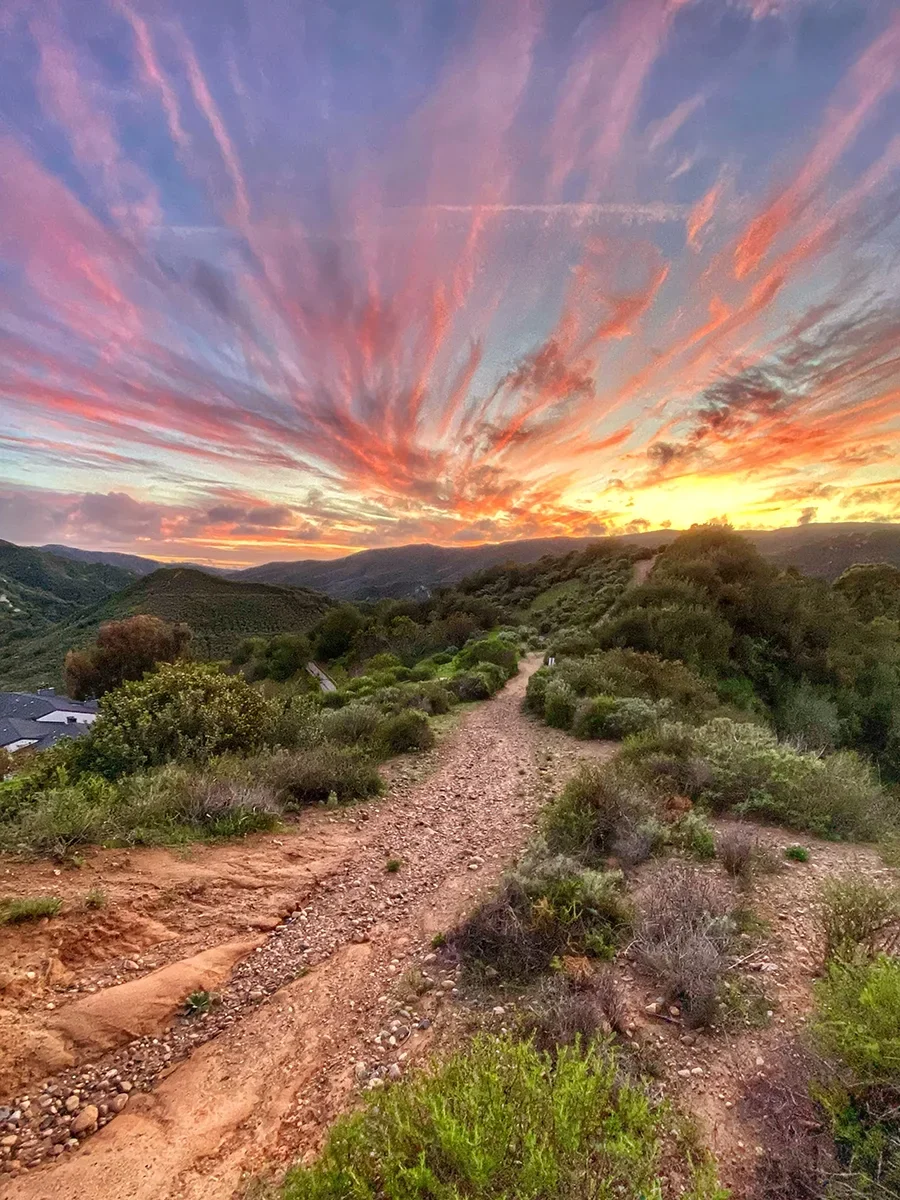
Larry Flesner's original poem that inspired the song "Roads" on Vermillion + Co.'s Fool's Gold album
The Road of Life
by: Larry Flesner
There are things inside me yet to say.
I hope I get them said someday,
before all time just slips away
down roads that seem to never end.
That road is called reality;
a thousand miles have tested me
with answers hidden from my sight
along that road without an end.
The road we travel bears no name.
We’re each assigned a separate lane
and hope our stories end the same
upon that road without an end.
It leads somewhere we cannot know,
yet still we join the crowded flow,
bent by the winds that ceaseless blow
along that road without an end.
The road of life, for you and me,
unfolds in different destiny,
with signs for guidance we can’t see
upon that road without an end.
There are times I wish to try again,
to better grasp and understand
the truths sought out by fellow man
along that road without an end.
But answers come in shades of gray,
too many words that others say
I hear, then quietly cast away
down roads that seem to never end.
So spend the time you travel here
to conquer doubt, regret, and fear,
and hold your loved ones always near
upon that road without an end.
© 01/29/2026 Larry G. Flesner
Listen on YouTubeAbout the Author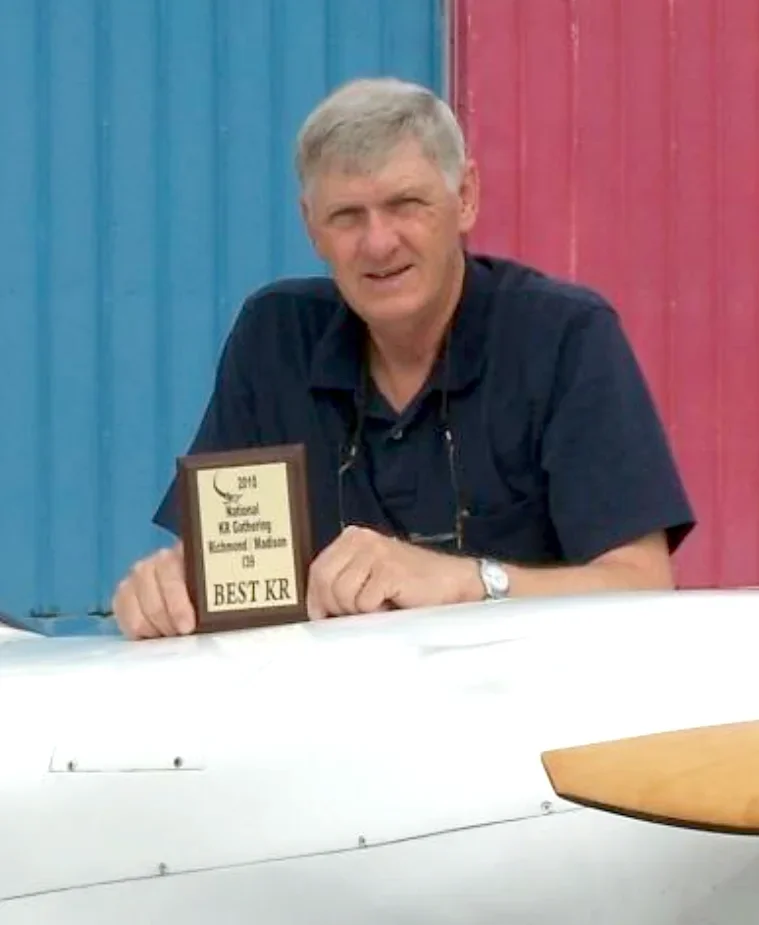
“A map of words is all you have to show the path that brought you to this place…”
Larry Flesner grew up on a farm near Golden, a small town in western Illinois. He spent four years in the U.S. Air Force working on electronics and cryptographic equipment, then more than 30 years with Xerox. Part-time jobs in the skilled trades, community education classes, and volunteer work kept him busy until he officially retired at 80.
A pilot for over 50 years, Larry earned the prestigious Wright Brothers Master Pilot Award and logged 800 hours over two decades in the award-winning custom KR-2 he built himself.
Married for 60 years with two daughters and grandchildren to cherish, he's now enjoying a slower retirement pace, while his creative mind never stops spinning out poems, lyrics, and songs. In 2026, his humorous poem "From Vanity to Humility" won first place in the Poets & Patrons Chicagoland Poetry Contest.
Larry Flesner's original poem that inspired the song "Night Flight" on Vermillion + Co.'s Fool's Gold album
Night Flight
by: Larry Flesner
On a cool winter evening the sun pauses on the horizon,
Its duties of the day are done.
It will soon disappear and the world will be hidden in the black of night.
The creatures of the day will have their rest and slumber.
My man-made wings lift me into a disappearing sky
as darkness swallows up the earth below.
A world of lights appear, illuminating paths for those
unwilling to surrender to the powers of the night.
I see trails that tiny creatures use to travel from place to place,
ant-like in their lighted chariots.
Trails that weave like ribbons dropped carelessly from a package to the floor below.
I sense the presence of Gods, unseen, finding humor in their efforts.
A tiny symbol moves slowly across the screen of the
small magic box placed conveniently at my finger tips.
It records my journey through the darkness, to the destination
of my choosing, giving me direction across the featureless landscape.
Lights, everywhere there are lights, confusing my senses.
I feel as though I’m floating through the Milky Way.
The constant motion of the tiny symbol is my only
evidence of reality.
The greatest beauties in life are too often enjoyed in solitude.
My wish, to capture this moment and share it with the world, denied.
I can only later speak, as a prophet with a vision, telling others
of the beauty that I saw.
The magic box, unhindered by the darkness, counts down the time
I have remaining in this bird-like state.
I guide my magic carpet on a slow decent through the darkness,
merging time and place into a known reality.
Then, once again, I’m bound in the microscopic world
of fences and stop signs and
I can only wonder if other earth bound souls were with me,
in their own solitude, enjoying the beauty of the night.
© 02/14/2002 Larry G. Flesner
Listen on YouTube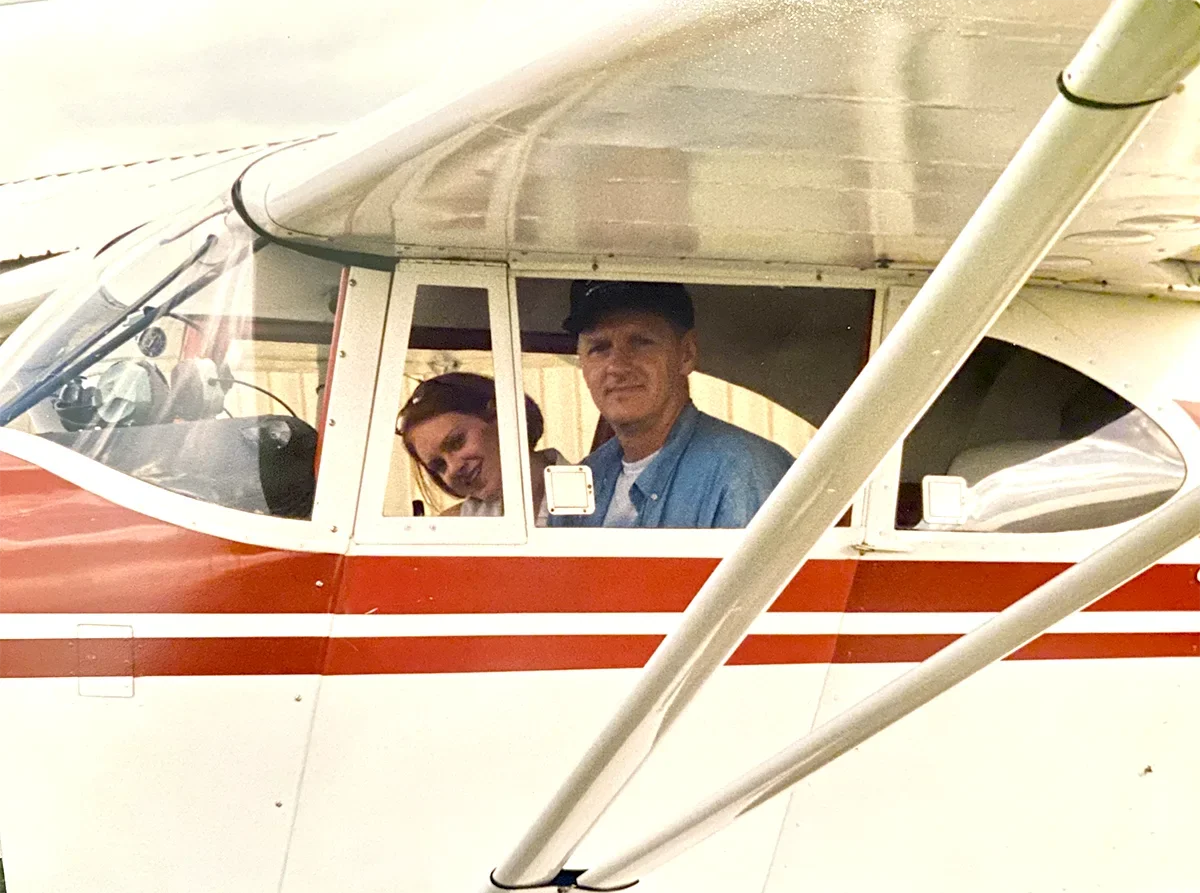
Pictured:
Jules Flesner (left) and Larry Flesner preparing to take flight in Larry’s Tripacer, 1999.
The History Behind “Miners” on Vermillion + Co.’s Magenta Album
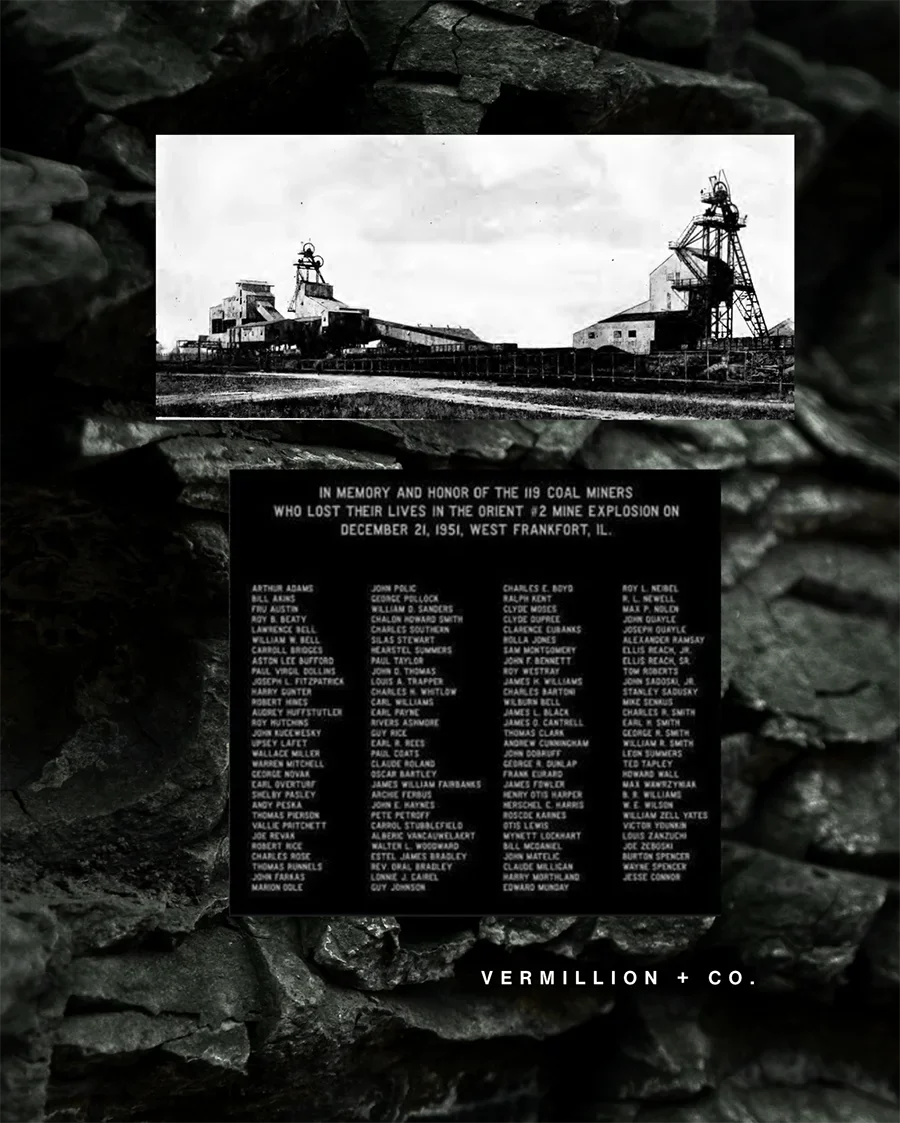
OLD KING COAL
Once upon a time… Southern Illinois was known as the “Saudi Arabia of coal.”
Just outside the town of West Frankfort sat Orient No. 2, the largest shaft coal mine on the planet. It famously set the global single-shift production record by churning out over 15,000 tons of coal in just eight hours.
In December 1951, an underground mine explosion claimed the lives of 119 miners.
Among the victims was a Baptist preacher who wasn't even scheduled to work at the site that day. As the story goes, he needed extra money for his family ahead of the holidays, and had stepped in to cover a shift offered by his brother.
"Last words hundreds of feet
beneath the earth that day
Neighbors prayed with neighbors
just a shovel’s width away
The flame took Pastor Bradley
final tallies showed
Called to lead the miners through the dark
to heaven’s gates of gold"
The explosion left more than 170 children grieving the loss of a parent just four days before Christmas, and triggered a ripple effect of loss that reshaped families across generations.
It also led to the Federal Coal Mine Safety Act of 1952, which gave federal inspectors the power to legally enforce safety rules for the first time in U.S. history.
Unearthing a piece called "Old King Coal" in my dad’s 40-year collection of songs and poems inspired me to look into the often-unsung national history of the coal mines near where I grew up in Southern Illinois.
The song "Miners (Old King Coal)" by Vermillion + Co. is dedicated to the families and descendants of the Southern Illinois miners who never made it home on that “Black Christmas.”
A nod to the nursery rhyme Old King Cole is tucked into the last verse:
“Now darling don’t you cry
at our names cut in stone
May the Good Lord bless and keep you
as you read them one by one
Some say they hear our voices
some hear fiddlers three
Oh how merry we will be
since Jesus washed the dark dust clean”
Listen on YouTubeThe History Behind “Herrin County” on Vermillion + Co.’s Fool’s Gold Album
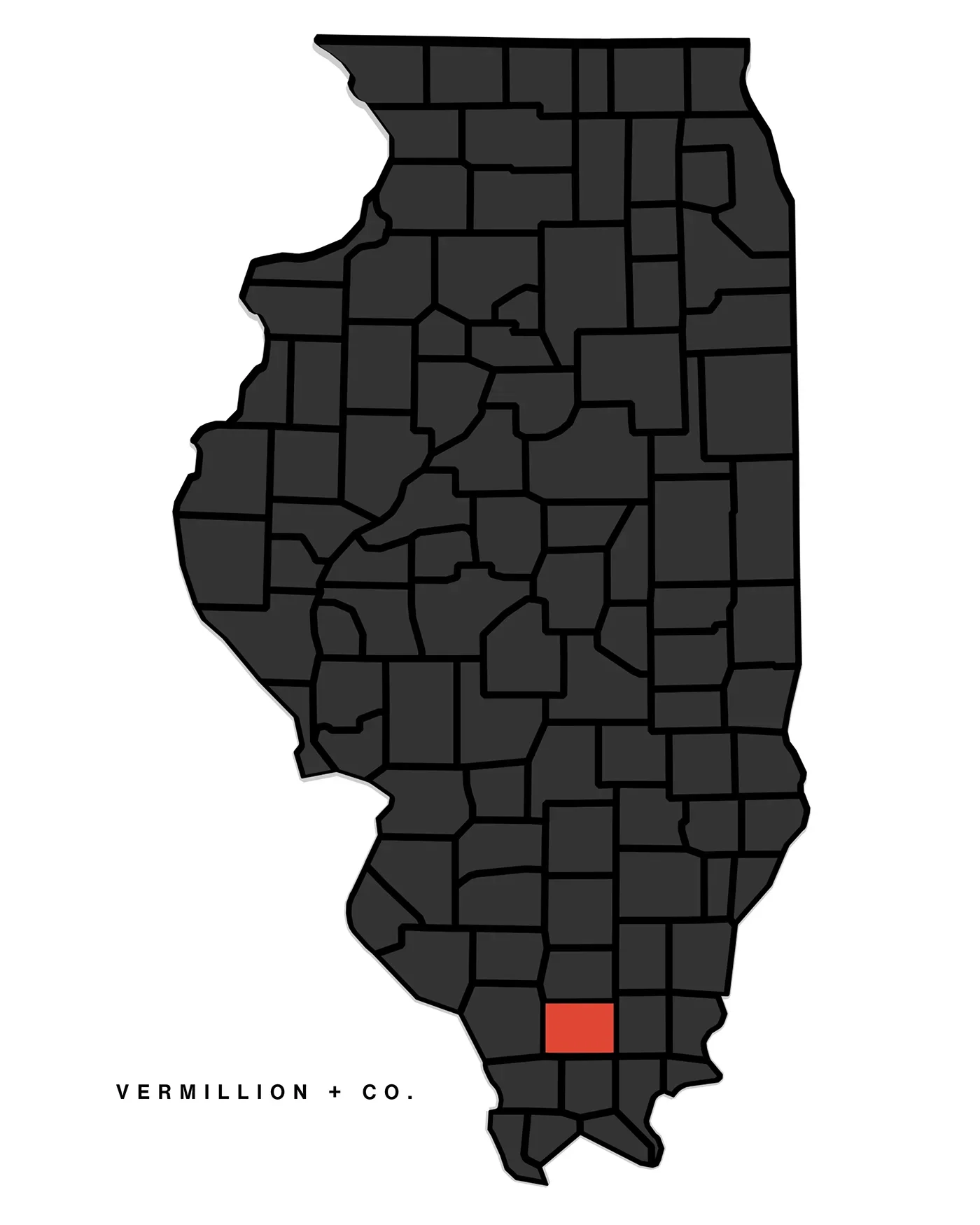
herrin County
Most people have never heard of the Herrin Massacre, one of the darkest, most violent events in American labor history.
It all started in April 1922, when coal miners across the United States went on strike. A mine owner near the town of Herrin, Illinois (Williamson County) decided to break a union agreement and bring in non-union workers from Chicago to keep the coal moving. These laborers, many of who didn't even realize they were breaking a strike, were brought in under the protection of armed guards and shipped out 16 railcars of coal.
Furious local union strikers surrounded the mine on June 21, 1922. After a shootout that left three union strikers dead, the trapped guards and strikebreakers ran out of ammo. The next morning, the workers and guards still at the mine agreed to surrender on one condition: a promise of safe passage out of Williamson County.
That promise was immediately broken. Strikers marched the captives at gunpoint toward Herrin. In town, a crowd of local residents followed behind. The captives were physically beaten and, at several points, made to crawl on their hands and knees. The mob killed the mine superintendent, then told the captives to run at a barbed-wire fence and opened fire. Some who survived were taken to the Herrin cemetery and killed there.
The massacre made headlines across the country. And what happened next was just as shocking. A grand jury handed down indictments for everything from rioting to murder, but because Union loyalty ran so deep in the county, local juries acquitted those who went to trial. In the end, no one from the mob was ever convicted.
I first learned about the Herrin Massacre in junior high school during a summer program on local county history. The brutal killings happened during the era in Southern Illinois known as “Bloody Williamson,” a region that, ironically, falls within the Bible Belt. That particularly gruesome two-day episode of mob violence stuck with me.
In the late 2000s, out of college and living in Nashville, I caught a Justin Townes Earle show and loved his take on old country and bluegrass. On my way home from his show, I got the idea for a song about the Herrin Massacre set to that old 1930s bluegrass sound.
I imagined someone from the mob alone in a prison cell. Whether they were literally behind bars or imprisoned in the private hell of living with what they’d done, I pictured them thinking about the people they’d tortured, forced to crawl at gunpoint, tied up, and executed. I wondered if the ghosts of the people they’d killed haunted them.
I wondered, too, if the sermons they heard week after week in the Bible Belt brought back memories of forcing others to their knees. Did their guilt ever force anyone from that mob to their knees to ask God for forgiveness?
As I was finishing the lyrics, I swapped state names to make the line fit the melody. In the song, it’s “Herrin County, Kentucky.” In real life, Herrin is a town in Williamson County, Illinois, about fifty miles from the Kentucky border.
A nod to the striking miners who formed the mob can be found in the verse where a prisoner strikes a line into the wall to mark another year he has left to serve.
“I etch another line in the wall beside me
One for all the years I know can’t outrun
Every choice I made
In the years that fade
Striking through 'em ‘til my judgement day is come
I’m down and out and locked in Herrin County
The voices in these walls, they whine and wail
I’m on my knees
Beggin’, please
Save me from this old Kentucky jail”
Listen on YouTubestream or download
Music from Vermillion + Co. is available on Bandcamp, Spotify, Apple Music, YouTube, and Amazon Music, with audio ready for use across social media platforms.